http://www.eaglesandelephant.blogspot.com/
Jesus, the Physician


Throughout the Gospels, Jesus performs many miracles. He heals people from different social classes. He heals Jews and non-Jews. He even heals sinners. His healings are not just physical. Though he does heal people of their physical ailment (blindness, paralysis, flow of blood, leprosy, a withered hand, and so on), he also and more importantly heals people of their spiritual ailments (most notably forgiving their sins). As a result, Jesus is known as a physician, a healer. Since he is God, he is the Divine Physician.
The Healing of the Paralytic


I encourage you to slowly read through this scene. (Mk 2.1-12) Every time I do, I am struck by the choice of words.
A man is paralyzed. Does he ask to go to Christ? No, the text just says his friends bring him. A man is sick. His friends take him to Christ. Simple. However, they can't get in. The house is packed. The place is full. Do they give up? Do they say, "Well, we tried"? No. They persist. Without ceasing, they—in a sort of prayer—continue to get their friend to the One they believe in. Does the friend say anything? Does the friend say he wants to go to Christ? No. The friend is sick and paralyzed. For whatever reason, he is quiet, as if he cannot talk, as if he is too sick to communicate his desires or voice his protests. Yet friends are friends. They will not be turned away. They will continue to try for a friend, for a loved one.
The friends raise the paralytic up to the roof and lower him down through an opening. Now, the key, the word that always resonates: "... their ..."
And when Jesus saw their faith, he said to the paralytic, "My son, your sins are forgiven."
We remember that Jesus forgives his sins. As well, he soon heals the man of the paralysis. That is what we have come to expect from Jesus. But why? Why did Jesus do it? The text reveals the answer: "And when Jesus saw their faith ..."
Their faith.
Jesus saw their faith and was moved. Jesus saw what they had done. Jesus saw that a group of believers in him loved a friend. Jesus saw that this group did not let crowds or a full building get in the way of transporting their friend to him. Jesus saw that this group risked to get their friend to him. Theyraised him up to the roof, made an opening, and lowered theirparalyzed friend down into Jesus' midst.


Because of their faith, he turned to the paralytic and forgave the man his sins. Jesus did not forgive him because of anything he (the paralytic) had said or done. No. Jesus forgave the man because of the man's friends. More precisely, Jesus acted because of the faith of the man's friends.
We can help our friends and loved ones by carrying them to Jesus, not letting obstacles of whatever sort get in the way. Thus, we truly become "co-workers" with the Lord. (1 Cor 3.9) We bring to him and thus help him in the work of salvation, in the work of saving souls.
This is Jesus, the Divine Physician, the one who heals those brought to him out of faith, those we hope he turns to and once again utters those sought after words: I say to you, rise ... and go home. (Mk 2.11)

Empty Tomb


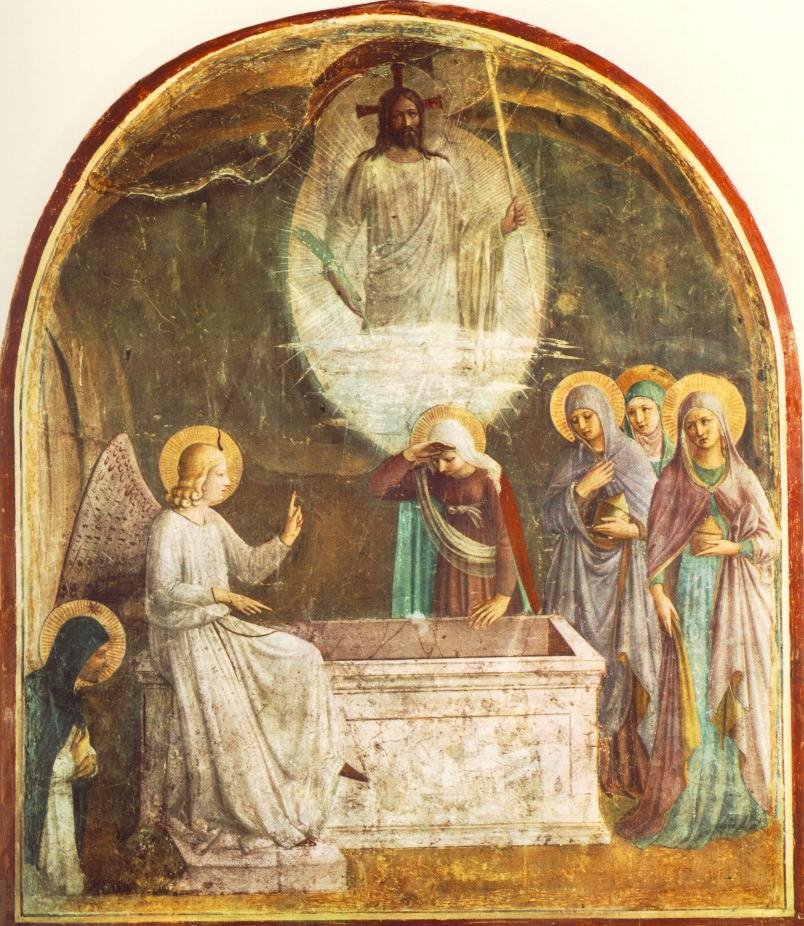
When Mary Magdalen came to the tomb and did not find the Lord's body, she thought it had been taken away and so informed the disciples.


After they came and saw the tomb, they too believed what Mary had told them. The text then says: "The disciples went back home," and it adds: "but Mary wept and remained standing outside the tomb."


We should reflect on Mary's attitude and the great love she felt for Christ; for though the disciples had left the tomb, she remained. She was still seeking the one she had not found, and while she sought she wept; burning with the fire of love, she longed for him who she thought had been taken away. And so it happened that the woman who stayed behind to seek Christ was the only one to see him. For perseverance is essential to any good deed, as the voice of truth tell us: "Whoever perseveres to the end will be saved."
--St. Gregory the Great


The Risen SON: Easter Sunday

Christos Anesti!

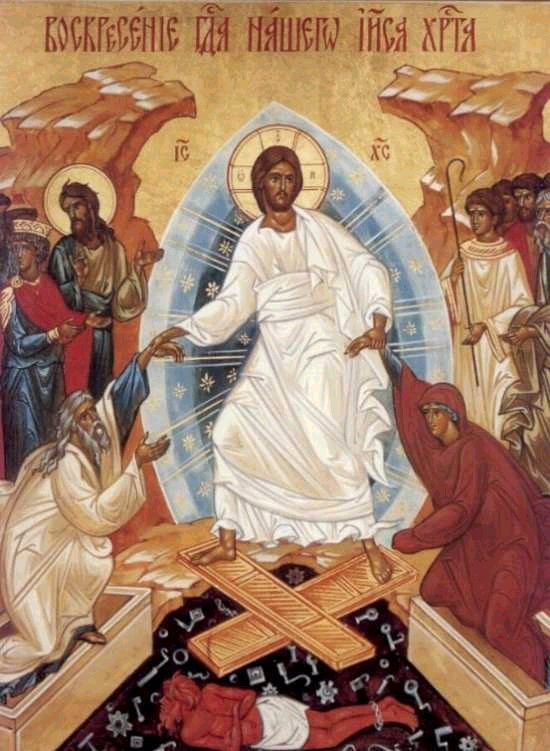
"I did not make you for the dungeon." In this Easter hour let us ask the Lord to visit the dungeons of this world; ... Let us ask him to enter into the spiritual prisons of this age, into the darkness of our lack of truth, revealing himself as the Victor who tears down the gates and says to us, "I, your God, have become your Son. Come out! I have not created you to be in prison for ever. I did not make you for the dungeon." In his play No Exit Jean Paul Sartre portrays man as a being who is hopelessly trapped. He sums up his gloomy picture of man in the words, "Hell is other people". This being so, hell is everywhere, and there is no exit, the doors are everywhere closed.
Christ, however, says to us, "I, your God, have become your Son. Come out!" Now the exact opposite is true: heaven is other people. Christ summons us to find heaven in him, to discover him in others and thus to be heaven to each other. He calls us to let heaven shine into this world, to build heaven here. Jesus stretches out his hand to us in his Easter message, in the mystery of the sacraments, so that Easter may be now, so that the light of heaven may shine forth in this world and the doors may be opened. Let us take his hand! Amen.
--Joseph Ratzinger (Pope BenedictXVI)

Alithos Anesti!

CHRISTOS ANESTI! Christ Is Risen

Only since Easter can we really utter the first article of faith; only on the basis of Easter is this profession rich and full of consolation: I believe in God, the Father Almighty. For it is only from the Lamb that we know that God is really Father, really Almighty.


This greatest festival of the Church's year encourages us, by looking at him who was slain and is risen, to discover the place where heaven is opened. If we comprehend the message of the Resurrection, we recognize that heaven is not completely sealed off above the earth. Then--gently and yet with immense power--something of the light of God penetrates our life. Then we shall feel the surge of joy ....
--Joseph Ratzinger (Pope BenedictXVI)

Christos Anesti!

The Son Is Rising

The light shines in the darkness, and the darkness has not overcome it. (Jn 1:5)


Easter is concerned with something unimaginable. Initially the event of Easter comes to us solely through the word, not through the senses. So it is all the more important for us to be won over by the immensity of this word. Since, however, we can only think by employing sense images, the faith of the Church has always translated the Easter message into symbols which point to things that the word cannot express. The symbol of light ... plays a special part; the praise of the Paschal candle--a symbol of life in the midst of the darkened church--is actually a praise of him who proved victor over death. Thus the event of long ago is translated into our present time: where light conquers darkness, something of the Resurrection takes place.
--Joseph Ratzinger (Pope BenedictXVI)